

Satake Shirogami Gyuto Japán szénacél szakácskés 63 HRC, 21 cm, THE JOKER CHEF JIMMY - limitált - lézergravír mintázat
268 £
Satake Shirogami Gyuto Japán szénacél szakácskés 63 HRC, 21 cm, THE JOKER CHEF JIMMY - limitált - lézergravír mintázat
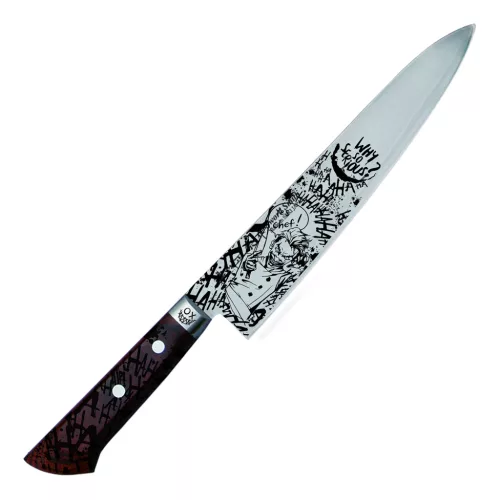


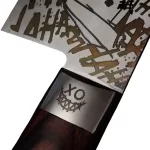
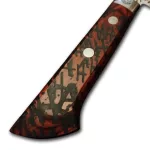
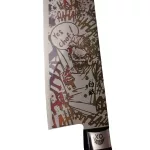
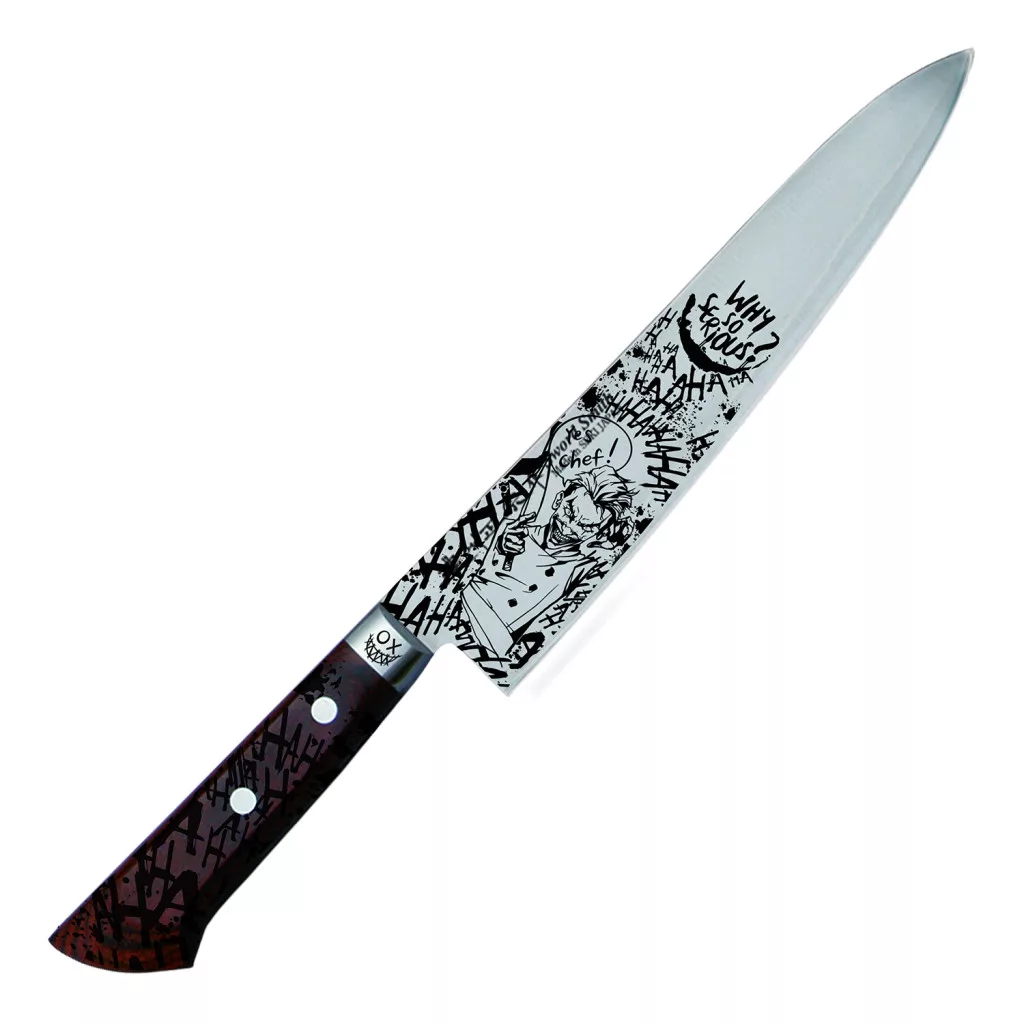
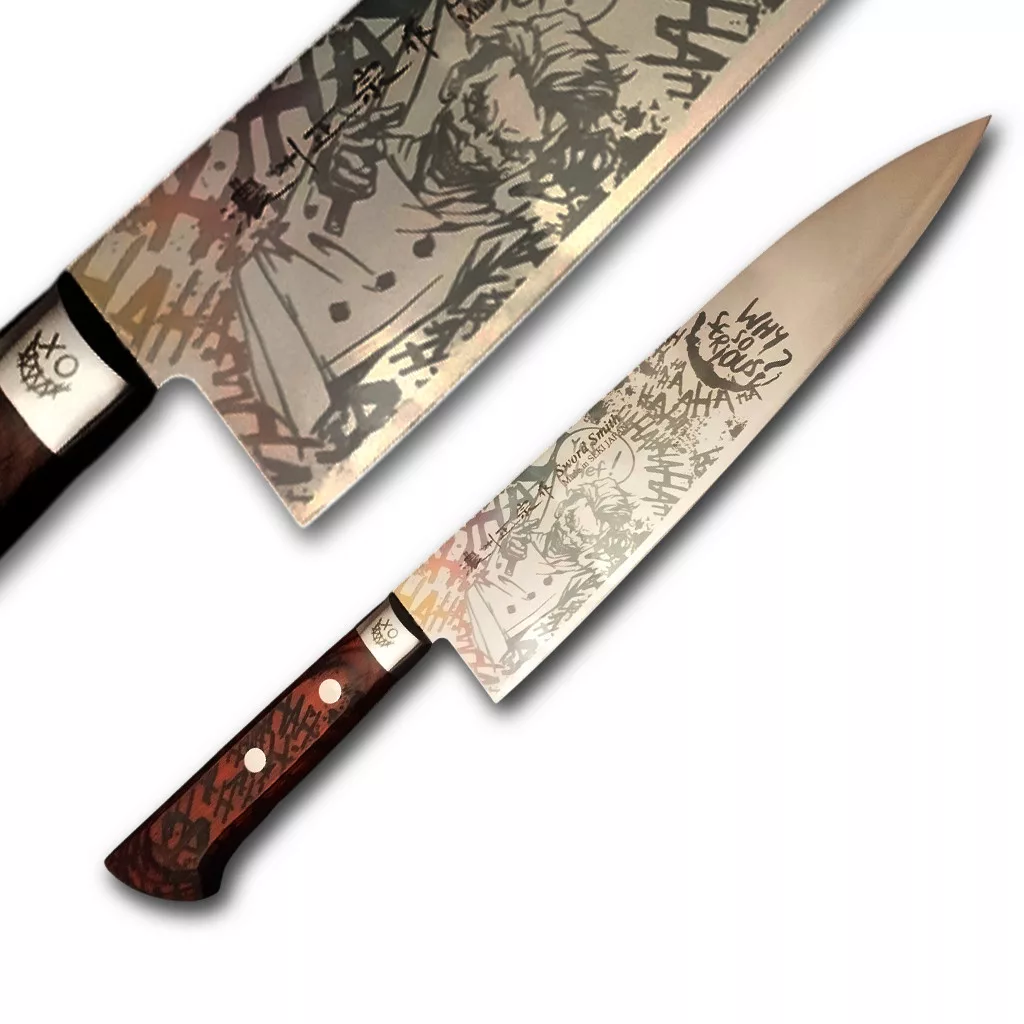
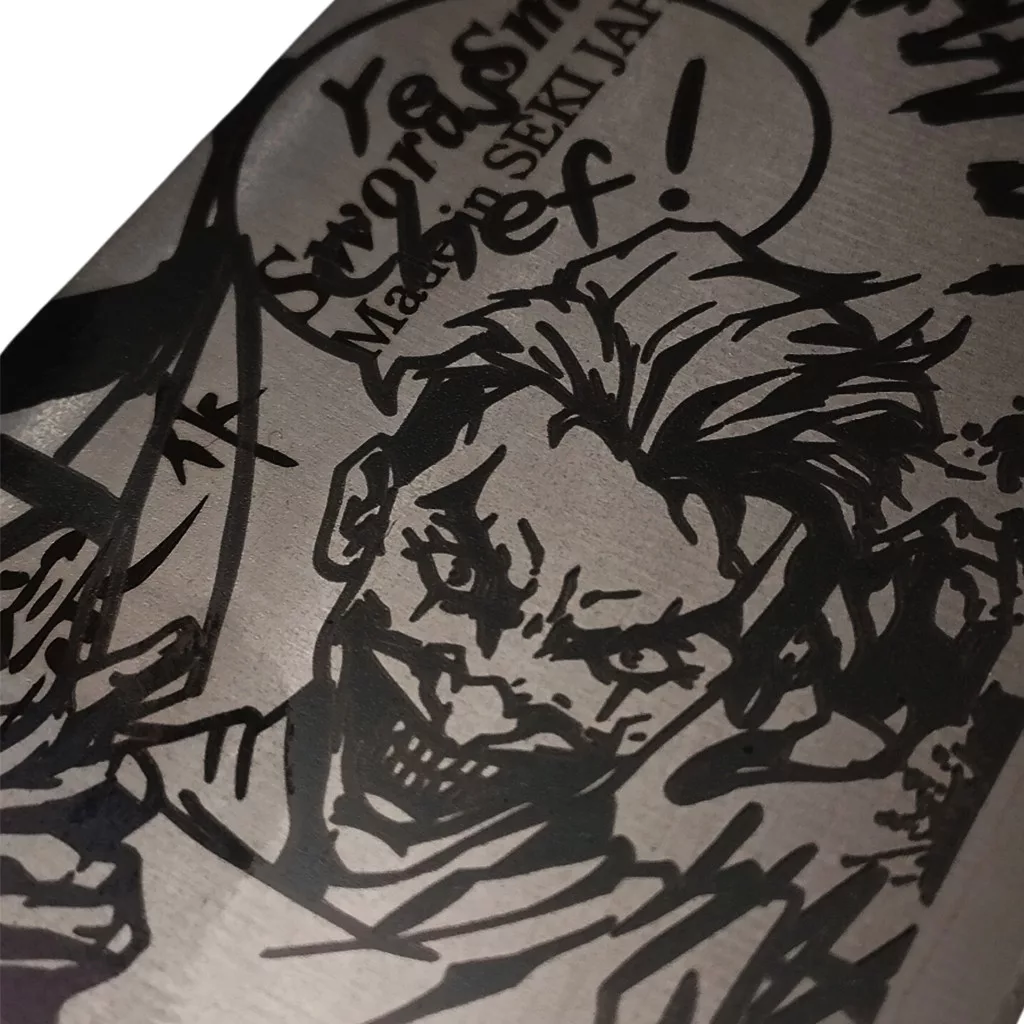

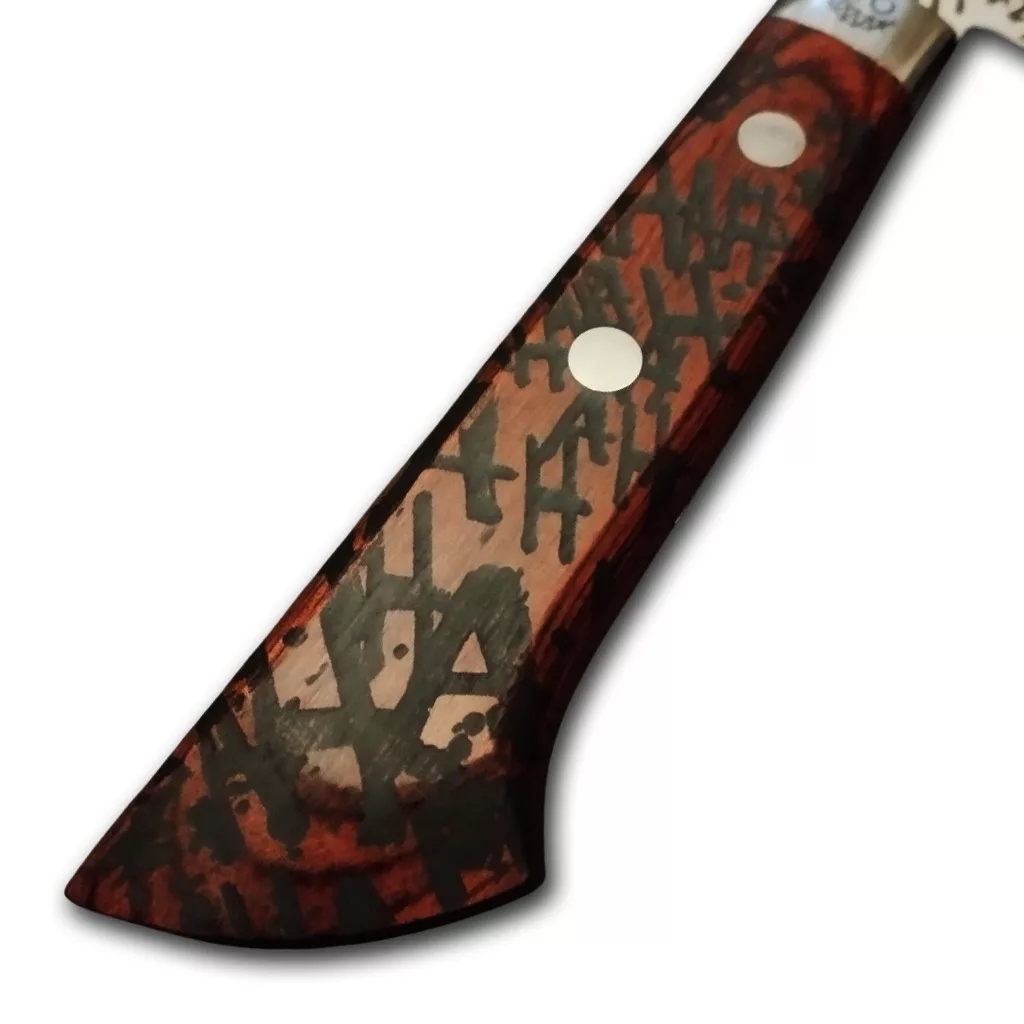
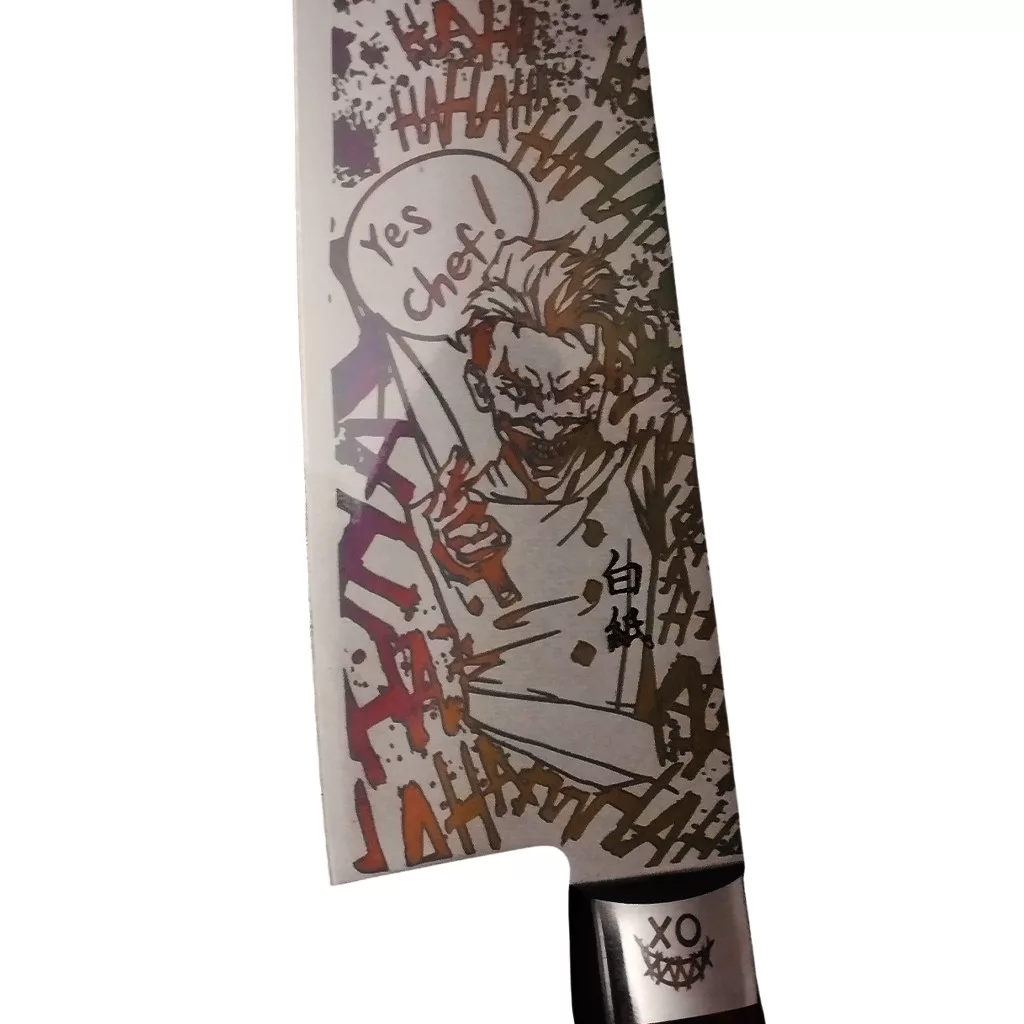
THE JOKER CHEF JIMMY X SATAKE LIMITED EDITION ENGRAVED CHEF KNIFE
LIMITED 10 PIECES
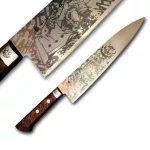
BOTH SIDES OF THE BLADE ARE ENGRAVED
BOTH SIDES OF THE HANDLE ARE ENGRAVED, HAND FINISHED
Blade material - Shirogami steel - carbon steel
Handle material - mahogany
Hardness - 61-63 HRC
Total length - 33.5 cm
Blade length - 21 cm
Blade width - 4.5 cm
Blade thickness - approx. 1.5 mm
Cutting edge design - double-sided symmetrical
Weight - 167 g
Manufacturer: Satake Cutlery Mfg. Co., Ltd. Made in Japan.
Item number: 803-373-thejoker

268 £
Points earned after purchase:
13 £
We also recommend the following product as an accessory
Details
THE JOKER CHEF JIMMY X SATAKE LIMITED EDITION ENGRAVED CHEF'S KNIFE – JAPANESE QUALITY IN THE KITCHEN
)
ADDITIONAL INFORMATION:
How to use Japanese chef's knives correctly? (Click the text to access the article.)
Modern Japanese Knife Making: Where Tradition Meets Innovation (Click the text to access the article.)
Look no further if you are looking for an unforgettable gift that combines practicality with artistic craftsmanship. The perfect gift is born in the spirit of quality and exclusivity: give a premium quality Satake Japanese knife, representing centuries of knife-making tradition. These kitchen masterpieces guarantee unparalleled sharpness and perfect balance, providing an experience with every use.
Exceptional quality is ensured by a 100-watt MOPA laser machine, which enables precise, deep, and high-contrast engraving, far surpassing traditional methods. It is made with sophisticated precision based on unique designs, guaranteeing a luxury effect.
The Noushu Masamune Saku Shirogami Gyuto is an outstanding 21 cm Japanese chef's knife that is guaranteed to be the centerpiece of your kitchen. This extremely versatile kitchen knife is perfectly suited for the precise cutting of vegetables, fruits, meat, and fish. Thanks to its pointed design, you can reliably perform various filleting tasks, whether it's deboning chicken breast, separating pork or beef from the bone, or even filleting smaller fish (though the work is even easier with a specialized filleting knife). The optimal blade length (21 cm) ensures easy maneuverability and handling of larger cutting surfaces.
The blade is made of high-quality Shirogami steel (carbon steel), which guarantees outstanding sharpness and durability. The knife is completed by an elegant mahogany handle, which not only increases the aesthetic value of the knife but also provides a comfortable and secure grip during use. The Noushu Masamune Saku Shirogami Gyuto is an essential tool for every hobby and professional chef, the true soul of the kitchen.
History of the Gyuto Knife
The gyuto (牛刀) knife appeared during the Meiji period (1868-1912) when Japan opened up to Western culture. At that time, the consumption of beef also became widespread, creating a demand for a specialized knife suitable for processing this meat. The gyuto was modeled after Western-style chef's knives but with characteristics of Japanese knives, such as a thinner blade and a sharper tip.
The word gyuto means "beef knife", and it was originally intended for this purpose. However, it soon became clear that the gyuto is an extremely versatile tool, perfectly suited for other kitchen tasks as well. Today, the gyuto is one of the most popular Japanese kitchen knives worldwide. The Noushu Masamune Saku Shirogami Gyuto chef's knife is a stunning blend of traditional Japanese craftsmanship and modern material use.
Key Features:
- Noushu Masamune Saku Shirogami Gyuto Japanese chef's knife
- 21 cm blade length
- Blade material: Shirogami steel - carbon steel for outstanding sharpness and durability
- Handle: Mahogany wood for a comfortable grip
- Versatile use: for cutting vegetables, fruit, meat, fish
- Suitable for filleting and deboning
- Optimal blade length for easy control
- An essential tool for every chef
- Both sides of the blade are symmetrically engraved
- Both sides of the handle are symmetrically engraved
KNIFE STEEL COMPARISON TABLE
|
Steel Type |
Type |
Composition (Main Elements) |
Advantages | Disadvantages | Typical Use | Manufacturer |
| AUS-8A | Mid-range stainless steel |
Carbon: 0.70 - 0.75% Chromium: 13.00-14.50% Molybdenum: 0.10-0.30% Vanadium: 0.10-0.26% |
Good corrosion resistance: High chromium content. Easy to sharpen: Average hardness. Decent edge retention: Perfect for everyday use. Cost-effective: Common choice in mass production. |
General edge retention: Requires sharpening with normal frequency. Lower wear resistance: Compared to harder Japanese steels. |
Kitchen knives. Everyday use pocket knives. Fixed blade knives. |
AICHI - JAPAN |
| FAX-38 |
High-speed steel (HSS) Special purpose steel Japanese carbon steel |
Carbon: 1.23-1.33% Tungsten: 5.70-6.70% Molybdenum: 4.70-5.30% Vanadium: 2.70-3.20% Cobalt: 8.00-8.80% |
Excellent wear resistance: Due to high hardness and alloys. Extraordinary edge retention: For demanding cutting tasks. High heat resistance: Retains hardness even at high temperatures.
|
More difficult to sharpen: Due to extreme hardness. Higher price: Due to high alloy content and manufacturing technologies. Not stainless: Japanese carbon steel. Recommended for expert hands! |
Professional chef's knives. Special knives where edge retention is key. Industrial cutting tools (e.g., drills, milling cutters). |
NACHI FUJIKOSHI - JAPAN |
| MVS10Cob (DAMASCUS) | Cobalt-alloyed stainless steel |
Carbon: 1.00% Chromium: 14.27% Cobalt: 1.34% Molybdenum: 0.96% Vanadium: 0.21% |
Excellent edge retention: Due to cobalt content. Excellent corrosion resistance: Through the alloys. Balanced performance: For professional knives. Excellent toughness: Often compared to VG10 due to similar composition. |
Currently only available in damascus version. More expensive than simpler stainless steels. |
High-end kitchen knives. Quality pocket knives. General purpose knives where a durable edge is needed. |
NACHI FUJIKOSHI - JAPAN |
| U420J2 | Low-carbon stainless steel |
Carbon: 0.15-0.36% Chromium: 12.00-14.00% Manganese: 1.00% Nickel: 1.00% Silicon: 1.00% Sulfur: 0.03% |
Excellent corrosion resistance: High chromium content. Easy to sharpen: Relatively soft (Compared to other Japanese steels). Very flexible: Hard to break. Cost-effective: Basic Japanese stainless steel. |
Frequent sharpening: Compared to harder Japanese steels. |
Basic (home) kitchen knives. Diving knives (high corrosion resistance). Food industry equipment. |
NIPPON KOSHUHA - JAPAN |
| Japanese carbon steel (Traditional) |
Carbon: 1.25-1.35% Manganese: 0.20-0.30% Phosphorus: 0.02% Silicon: 0.010-0.20% |
Extreme sharpness: Very fine grain structure and high carbon content. Easy to sharpen: Often sharper than many stainless steels. Excellent cutting performance: Raw material for traditional Japanese knives. Patina formation: A characteristic surface develops over time. |
Prone to rusting: No chromium content. Maintenance-intensive: Requires careful cleaning and storage. Recommended for expert hands! |
High-quality Japanese kitchen knives. Razors. Uses where sharpness is paramount and maintenance is not a concern. |
HITACHI - JAPAN |
Data
Blade length
Blade Width
Blade Thickness
Blade material
Hardness
Handle material
Overall length
Grind
Weight
Item number
803-373-thejoker
Weight
167 g/pcs
Bundle offers
Reviews
Be the first to write a review!
Similar products